


Into the Woods and Meta-Psycho-Geography
- Jan 1, 2020
- 4 min read
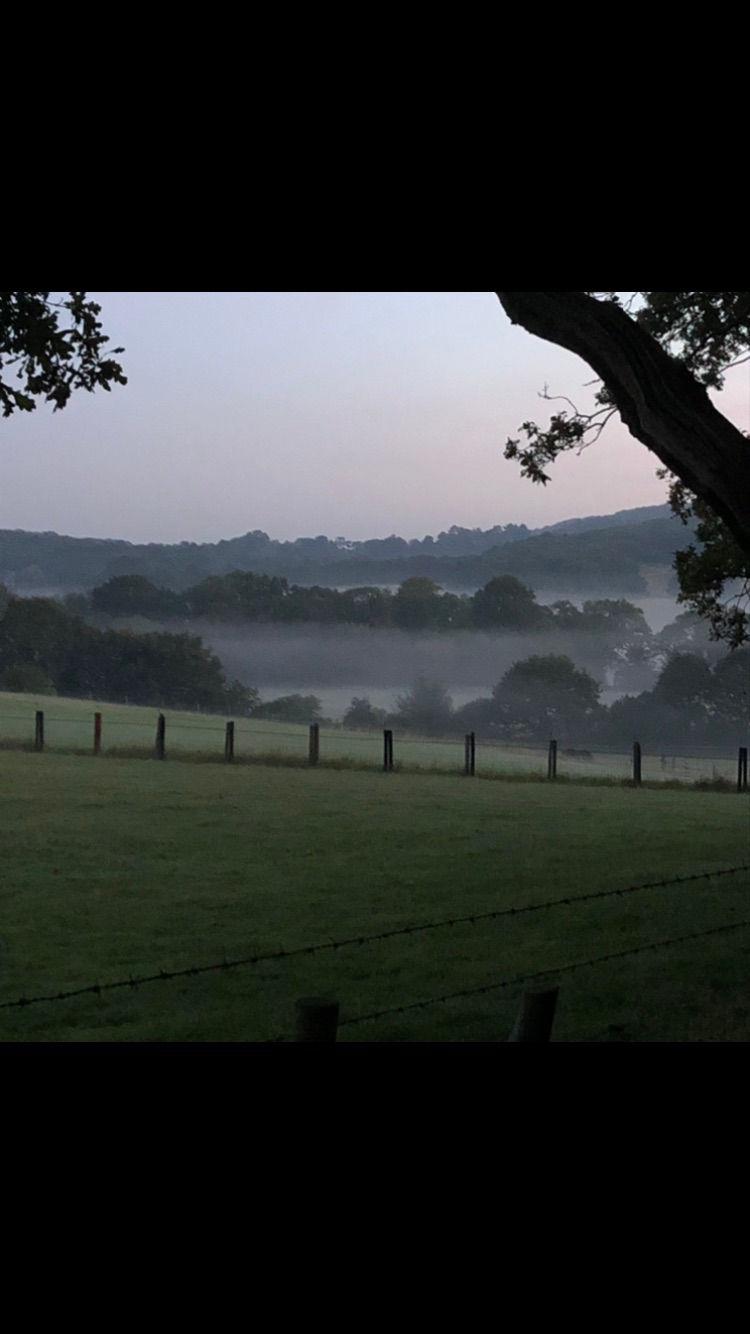
In On Walking and Thinking: Two Walks across the Page (2018:1-6) Trofimova and Nicholls consider how walking, both imaginary and real, affects their thinking and creative process. The paper is structured as a dialogue between the two academics, one based in Middlesborough, UK, the other in Aukland, NZ, both of them interested in the role played by rhythm and pace in their writing process. Specifically, though, the two speak about the metaphor of walking 'into the woods', likening such physical and cognitive movement to free writing, letting go, allowing yourself to get lost, moving away from rigid thinking or writing structures. Though neither ever mention this, they're referring to psychogeography - a kind of imaginary meta-psycho-geography, really. In fact, Nicholls says, of walking, both imaginary and real: 'It seems to me that there is a parallel here with a state of consciousness or awareness famously described by the psychologist of optimal experience, Mihalyi Csikszentmihalyi, as “flow”. In flow, “the loss of a sense of self separate from the world around it is sometimes accompanied by a feeling of union with the environment” (Csikszentmihalyi 63), together with pleasure in movement and in the sensory experience of seeing the world. So flow might be one way of thinking about my lived experience of walking in the woods.' (P3)
She's talking about her cognitive wander into these 'woods', where 'senses are heightened. I become acutely aware of each tiny sound—the ticking of the leaves, the wind, the birdsong, the crunch of my feet, the pounding of the blood in my ears. I become less aware of all the difficult parts of myself, my troubles, my stuckness, what weighs on me so heavily.' (P3) Which, to me, sounds like a pastoral scene, conventionally beautiful, relaxing, away from it all.
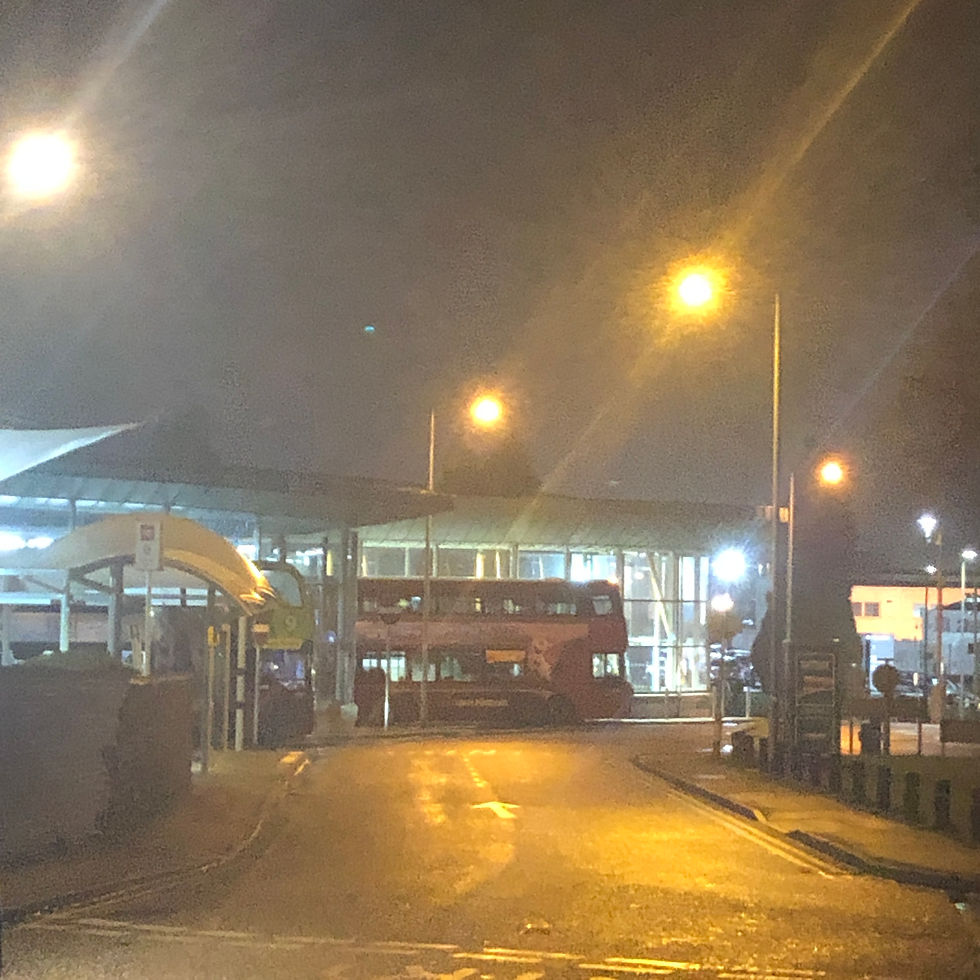
What I am talking about is quite the opposite: urban walking, into insurgent places, like edgelands, towpaths, industrial estates, housing estates, bus stations. If you like, conventionally ugly places, filled with danger of a different kind - especially to a lone woman (see previous post on that.) This paper seems to consider that walking could free up the imagination, to cleanse it, so that all previous constraints are loosened, and that a sense of freedom, of lack of restraint seem to open up a new joy in having a go and seeing what comes of any writing or creativity. There is a sense that what is seen on these walks will be inspirational. Nicholls talks about the (slower) pace she prefers to walk at, and how she likes to stop, pick up items (stones, leaves etc.) which she could use later on as inspiration. Both agree that their walking processes, though they differ, 'seems to have something to do with seeing, for both of us.' (P4) There is also research linking pace and speed of walking with thinking: 'The pace of walking, as the movement of our bodies through space, sets a particular temporal relationship with the objects we move past. In turn, this affects our “thinking time”, and our thinking about abstract ideas (Cuelenaere 127, referring to George Lakoff and Mark Johnson’s ideas).' (P4)
I've been thinking about this, and I'm not sure it's the same for me. I walk every day, and I am a fast walker. Sometimes I take photographs, sometimes I might notice something interesting and take it home to look at later. But mostly, I am not using walking to take me away from my writing, but to take me into it. I'm not oblivious to my surroundings, but I know it well, and I'm moving through it. I very often 're-run' particular walks later - the experience of it (it's much more complicated than just having 'seen' or 'felt' something) - and it's more complex than just remembering. (Perhaps this is my meta-psycho-geography.) It doesn't feel to me about a conventional engagement with the environment - far from it. (And I know I need to read up much more on this.) I go out with my writing in my mind - ON my mind. There is a topography of what I am writing about going on as I walk. Yes, Some of what I am writing takes place here, or where I choose to walk, sometimes. Perhaps that's what I'm calling Topoaesthesia. Unlike Trofimova and Nicholls, I'm not walking away from something, but towards it. As a result, my editing of God's Country is not ever found in the woods, but elsewhere, moving through a sensation of an environment I see as similar to the one in the novel, as if the novel exists and I am walking in it, experiencing it, and the place within it, which, although it is fictional, exists. Not so much walking into the woods, as walking into the writing itself. And I think what Trofimova and Nicholls are saying is that it is different for either of them, this process of walking.
Csikszentmihalyi, Mihalyi. (1997) Flow and the Psychology of Discovery and Invention. NewYork: Harper Perennial
Cuelenaere, Laurence. “Aymara Forms of Walking: A Linguistic Anthropological Reflection on the Relation between Language and Motion.” Language Sciences 33.1 (2011):126-137.
Trofimova, E. & Nicholls, S. (2018) 'On Walking and Thinking: Two Walks Across the Page.' M/C Journal 21.4: 1-6
Comments